What happens to a European project once its tools are finished? For them to live on beyond the project, they first need to be made known and shared. That was the whole purpose of the LS4YOU final dissemination event, organised by the Mission Locale Pays Basque on 15 June 2026 in Pagolle, a village of 250 inhabitants in the heart of the Basque Country. At Auzteia, the village’s community-run bar, 43 professionals came together: staff from two Missions Locales (Pays Basque and TM2O, which covers Mourenx, Orthez and Oloron-Sainte-Marie), trainers, disability and inclusion professionals, employment partners and local development actors. Some had contributed to the project from the start; most were discovering it. Designed as a professional development day, the event pursued three objectives: to improve the way young people are supported, to equip professionals with new tools and to build shared momentum across the territory.
Innovating in support: starting from young people’s strengths
After an introduction by the directors of both Missions Locales, Pistes Solidaires presented the European framework of the project, and the Mission Locale Pays Basque team then looked back on its implementation and results.
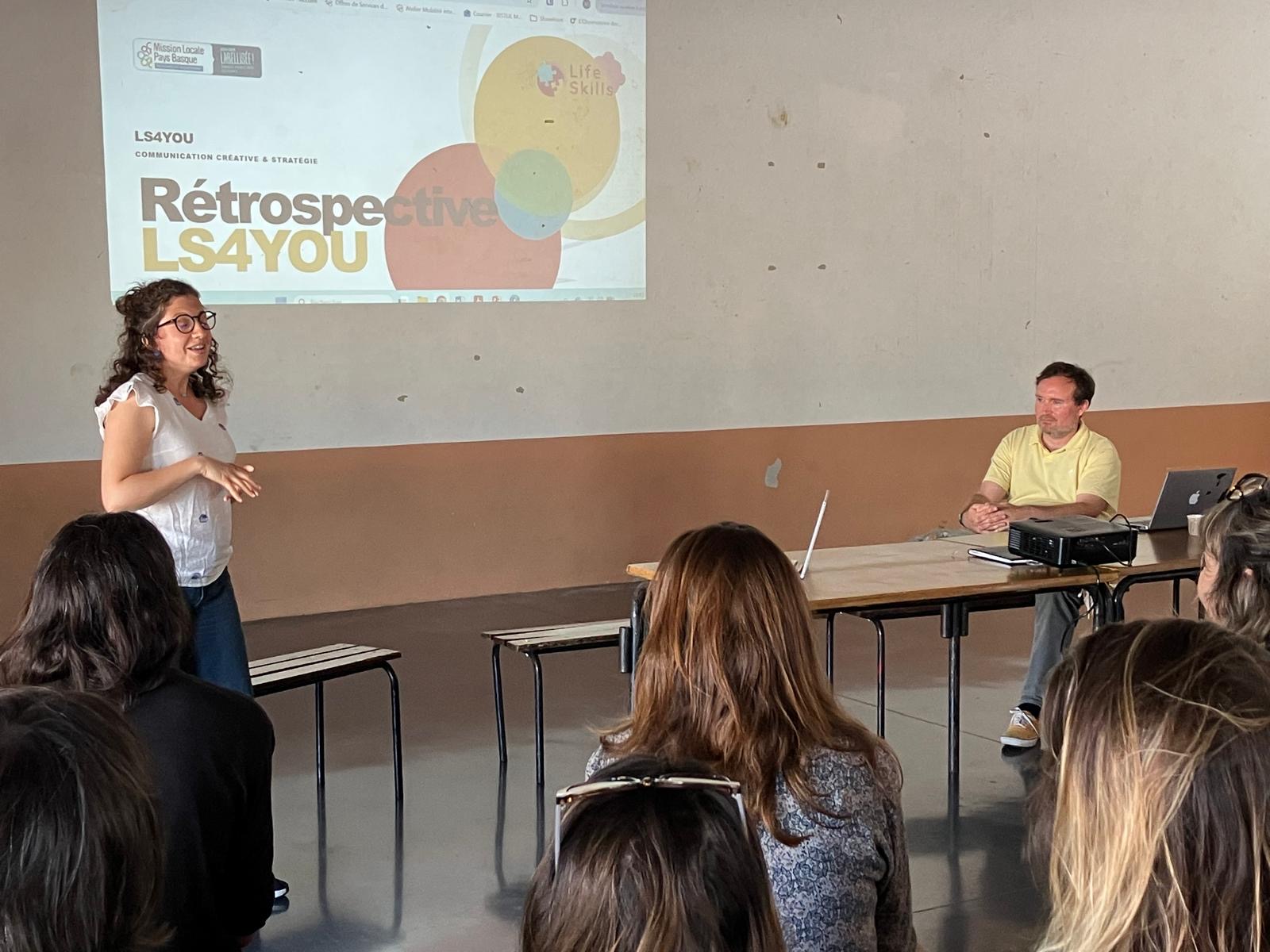
The project retrospective presented by the Mission Locale Pays Basque team.
The innovation LS4YOU brings lies first in a change of perspective. In the shared diagnosis, now at the heart of youth support, it is easy to spot what holds a young person back. LS4YOU also invites professionals to identify what they can already do: manage stress, make a decision, express themselves, draw on their resources. Participants saw this as a way to rebalance the diagnosis and to make young people more active in their own pathway. One flipchart summed it up in a single line: value what usually goes unvalued.
In the afternoon, the tools were tested in real conditions, first at presentation tables and then in three workshops: discovering life skills with a group of young people, supporting young people in using the platform, and preparing for a concrete goal, such as adopting a professional attitude during a company visit. Several new uses emerged, notably activities that young people complete on their own before or after an appointment, then review with their adviser.
Professional development: experiencing the approach before passing it on
The day began with an unusual exercise. Before testing a single tool, participants carried out, in small groups, a self-assessment of their own practice: what works well in the way they support young people, and what could be improved, first in light of young people’s needs, then of institutional expectations.
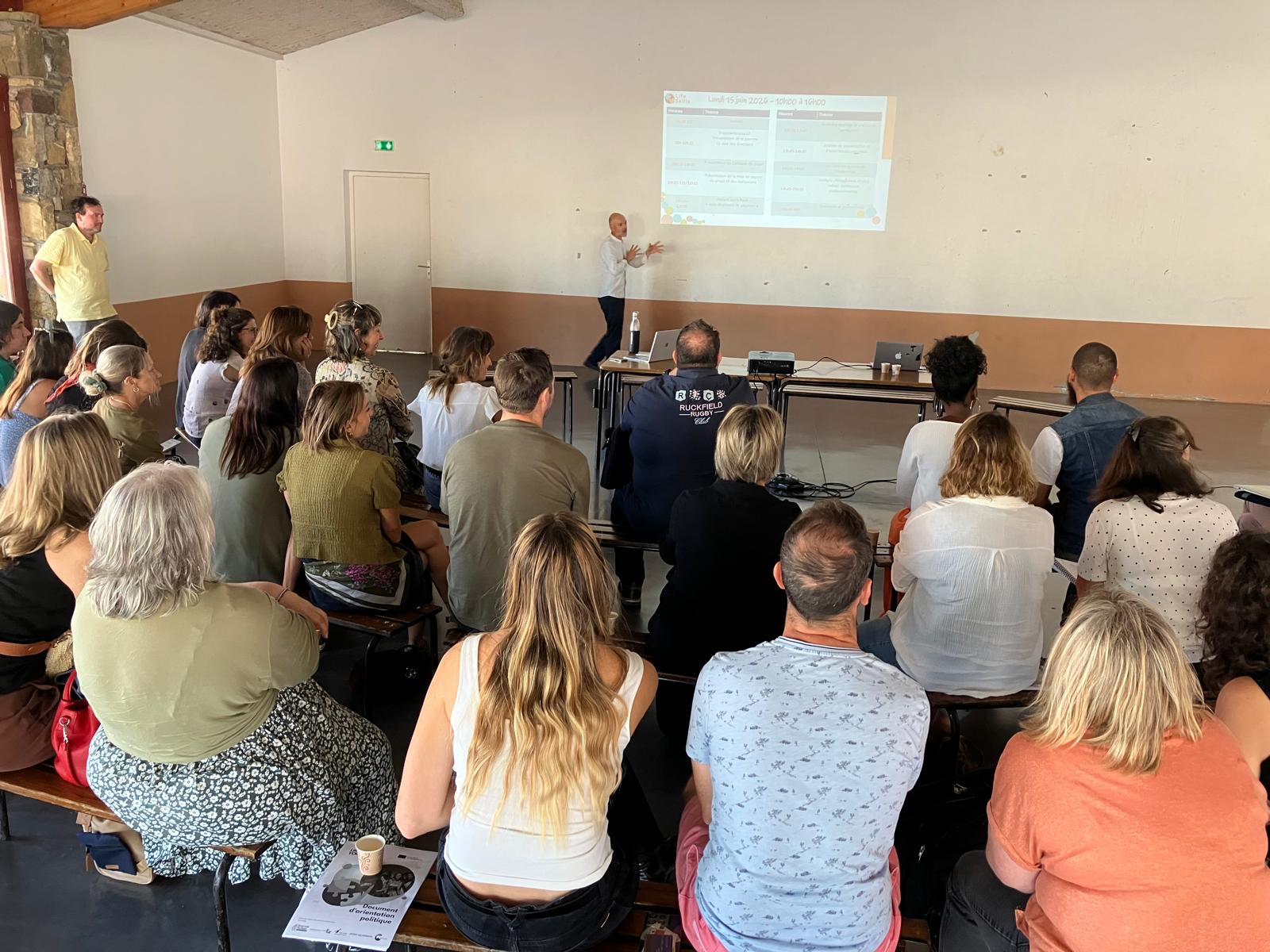
Presentation of the day’s programme to the 43 participants.
The walls were soon covered with sticky notes. On one side: listening, trust, personalised support. On the other: familiar tensions, such as the gap between young people’s pace and the timeframes of public schemes. The professionals thus applied the LS4YOU approach to themselves: start from your strengths before looking at what is missing. Facilitation by Jérémy Authier (Ethik Up) created a non-judgemental space that encouraged peer reflection on practice.
All respondents to the evaluation questionnaire found the day useful. Jérémy Authier described LS4YOU as a “gem”: a credible, transferable and operational resource. Participants also expressed clear needs for making the tools their own: shorter, modular activities; explicit scenarios of use; versions adapted to young people with reading difficulties, anxiety, disabilities or limited digital skills; and above all, time for training and peer exchange.
Building local networks: a common language across organisations
By bringing together two Missions Locales and local partners, the day also gave professionals who do not always work together a chance to share their perspectives. Participants stressed the value of a common language around life skills to better coordinate their support for the same young person. They identified other organisations that could use the tools: disability services, medical-educational institutes, support services for minimum income (RSA) recipients, youth associations and training providers.
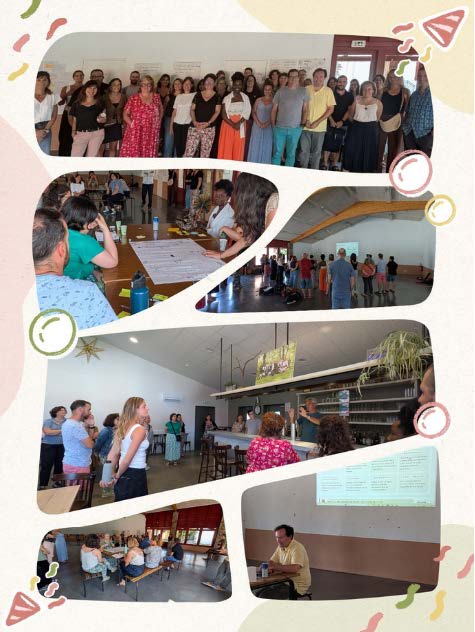
Group photo, workshops and discussions at the Auzteia community bar.
For the Mission Locale Pays Basque, this event opens a second phase rather than closing the project. By forming a group of volunteer professionals across the territory, the aim is to test, simplify and adapt the tools, and to build a network of ambassadors able to bring the approach to life within their own organisations.

Comments are closed